
A scrap count is filled in. The pan still looks full. You tap the edge of the steel scrap pan with your caliper to dislodge a curled aluminum chip stuck to the rim, cross-referencing the number scrawled on the sheet with the rough count of failed parts peeking out under the shavings. You don’t count every chip, but you know the gap between the written number and the actual scrap on your bench is too large to ignore right now. You pull the sheet flat under the overhead lamp to make out the two printed lines you need to compare first.
How This Run Sheet Matches Total Parts Scrapped This Shift to Cumulative Parts Scrapped For Lot
This run sheet tracks every part you pull from the 3-axis CNC lathe, whether it passes dimensional checks at your bench or goes into the scrap pan to be melted down later. The Total Parts Scrapped This Shift line only counts parts you mark as scrap since you clocked in three hours ago, while the Cumulative Parts Scrapped For Lot line rolls up all scrap from every operator who has worked on this 1,200-part aluminum bracket lot over the past four days. The incorrectly scribbled 12 on the shift line stands out against the pale blue paper, so you cross it out immediately, because you know the previous operator left 9 scrap parts in the pan when they handed off the job, so your actual shift scrap count is 3, not 12. To align the two lines before you log any new scrap, follow these steps:
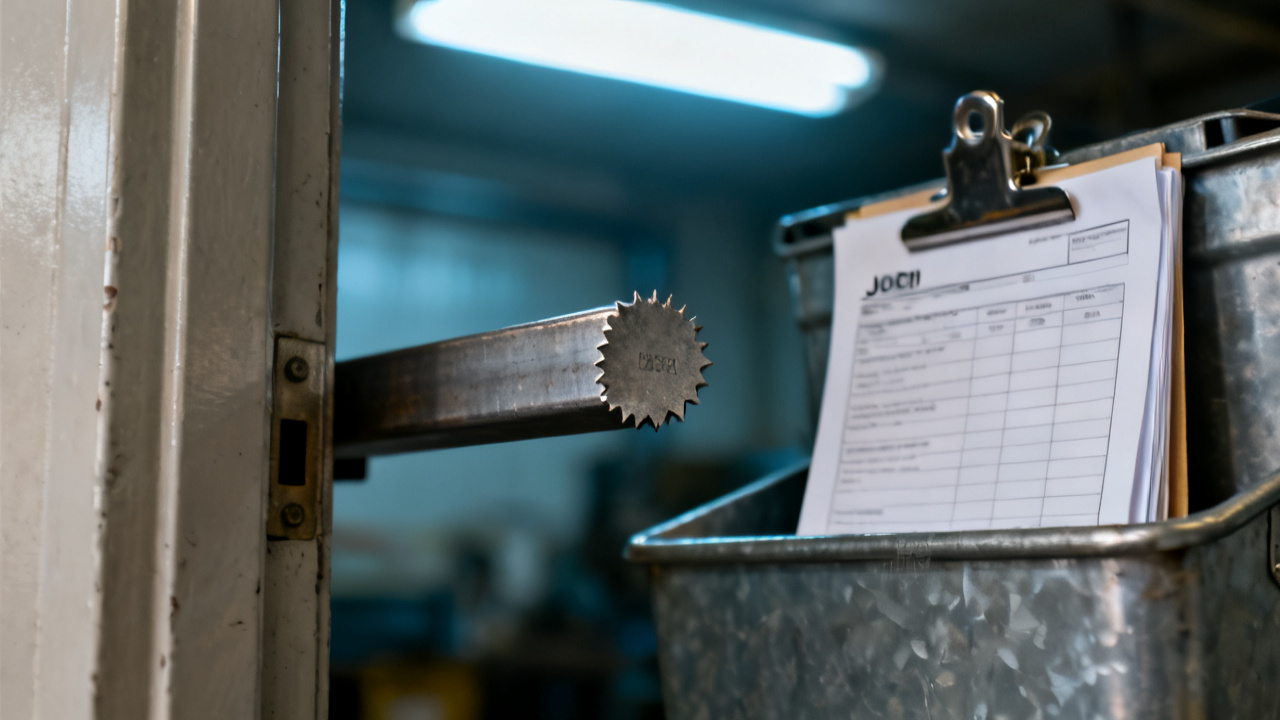
- Empty all loose metal chips from the scrap pan, sorting out any whole failed parts to count separately from trimmed offcuts that are not counted as whole part scrap per lot specifications.
- Subtract the number of scrap parts documented on the printed shift handoff note taped to the lathe guard from the total number of whole scrap parts in the pan to get your current shift scrap total.
- Add that current shift scrap total to the number listed on the Cumulative Parts Scrapped For Lot line from the start of your shift to update the cumulative count in dark blue pen, per shop documentation rules.
- Initial and date next to both updated lines to confirm you verified the count against the physical scrap on your bench before making any changes.
Illustrative example: If the cumulative count at shift start is 87, and your current shift scrap is 3, you update the cumulative line to 90, and mark the shift line as 3 to avoid counting the previous operator’s 9 scrap parts twice, which would incorrectly inflate the lot’s reported scrap rate by nearly 1%. You double-check your math against the parts sorted in front of you, making sure you did not mix up offcuts from the bracket’s mounting flange with whole parts that failed tolerance checks for the hole placement.
When Your Job Sheet Aligns Total Parts Scrapped This Shift to Cumulative Parts Scrapped For Lot
You perform this cross-check first thing when you sit down at the bench, right after you receive the handoff from the prior operator, and again every time you fill the scrap pan halfway, before you empty it into the central scrap bin near the back of the shop. You also run this check any time you adjust the lathe feed rate or swap out a new carbide cutting tool, since those changes can lead to a higher rate of scrap for the first 5 to 10 parts you run after the adjustment, as the tool beds in or the new settings settle. If you empty the scrap pan without reconciling the two lines first, you lose the physical proof you need to confirm the counts are accurate, and you could end up overreporting scrap for your shift that is actually attributable to earlier work on the lot. This check also triggers a quick review of the lot yield so far, so you can flag if the scrap rate climbs above the projected 10% for the lot, which lets the production team adjust schedules if more raw material is needed to hit the total part count. You keep a small magnetic whiteboard next to your bench to jot down the current scrap count as you work, so you don’t have to pull the sheet out of its protective holder every time you toss a failed part into the pan, cutting down on oil smudges and lost time.
Where Your Batch Sheet Discrepancies Between Total Parts Scrapped This Shift and Cumulative Parts Scrapped For Lot Originate
Most often, mismatches between the two lines come from operators forgetting to subtract the existing scrap in the pan when they log their shift count, as you almost caught a few minutes ago. Other times, discrepancies come from offcuts that are incorrectly counted as whole part scrap, or from parts that are set aside for rework instead of being marked as either passing or scrapped, since those parts do not count toward scrap until they are deemed unrepairable by the quality team. You glance over at the small plastic tray of parts waiting for second-op dimensional checks on the far corner of your bench, and make a mental note to add those to your count once the quality tech finishes their review, since any of those that fail will need to be added to both lines on the sheet. You also note that some discrepancies come from smudged ink on the cumulative line from cutting oil splatters, so you keep a pack of lint-free alcohol wipes next to the sheet holder to clean the edge of the sheet before you write new numbers, to keep the text legible for the next operator who works on the lot. If you find a discrepancy larger than 5 parts that you cannot trace to a handoff error or uncounted rework parts, you bring the sheet to the Traveler Desk to cross-reference the digital lot logs before you update the counts, to make sure you are not overwriting valid entries from earlier shifts.
Why Your Work Sheet References Total Parts Scrapped This Shift and Cumulative Parts Scrapped For Lot At Your Next Check-In
Next time you pick up this work sheet, before you start running parts for your next scheduled shift, you will first compare these two lines to the physical scrap left in the pan from your current shift, to confirm the numbers line up with what you leave behind when you clock out for the day. You do this not just to keep accurate count for the lot, but to make sure you are not held responsible for scrap that is not yours, and to help the production team track when cutting tools wear out faster than expected, so they can adjust the tool replacement schedule for future runs of this exact aluminum bracket. You will also note any adjustments you made to the lathe settings between now and your next check-in, so you can correlate any changes in scrap rate to those adjustments, helping the engineering team refine the G-code program for this part to reduce overall scrap for future lots. You tuck the sheet back into the clear plastic holder mounted to the lathe guard, making sure it is positioned so it does not get splattered with cutting oil while you run the next 20 parts, so the numbers are clear when you come back to update them at your next check-in, when you finish that batch of parts and prepare to empty the scrap pan again. This cross-check only takes 90 seconds each time you run it, but it saves hours of work later when the lot is closed out, as the production team does not have to track down every operator who worked on the lot to resolve mismatched scrap counts. You pick up your caliper again, measure the next part that just came out of the lathe, confirm it falls within the acceptable tolerance range, and set it in the finished parts bin, glancing over at the scrap pan to make sure you don’t lose track of the count as you work through the rest of your shift.