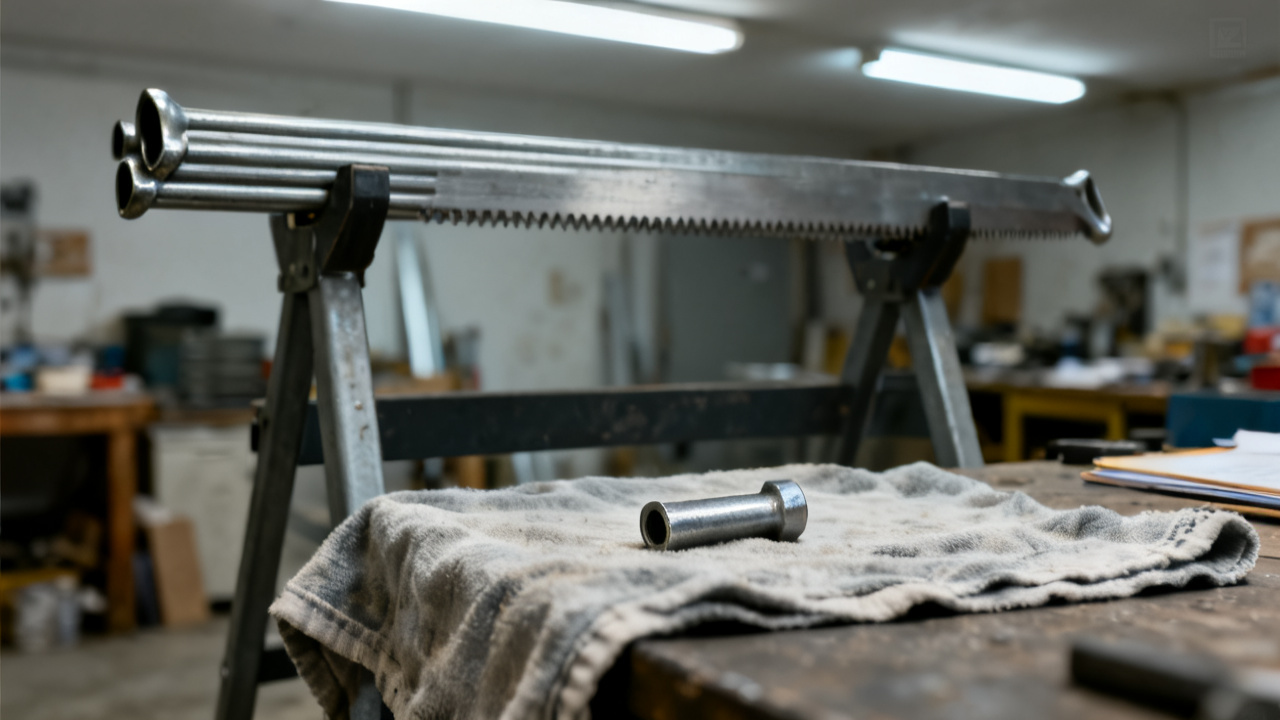
The lot is ready to move. The marked piece is still on the cloth. You ran your calipers over its critical flange three times in the last five minutes, and the surface roughness reading matches the print specification exactly. No burrs cling to its drilled through-holes, and your handwritten part number scrawl sits legibly on its masked top edge.
Lot staging details for this first piece run
The marked first piece is the control for the entire 240-unit run of aluminum flange adapters you just finished machining. You already separated the other 239 pieces into stackable plastic bins lined with anti-scratch foam, each bin holding 20 units, labeled with the lot number printed at the top of this sheet. The marked first piece never goes into those bins, even if its measurements fall well within tolerance, because it acts as the reference point for any future quality checks, rework requests, or production audits tied to this lot. You grab the small plastic zip bag marked “CONTROL PART” from the hook above your bench now to stow it once you complete the checks outlined on this sheet.

Physical storage location for the marked control part
The storage bin for lot-specific control parts sits on the third shelf of the climate-controlled parts cabinet at the far end of the shop floor, directly to the left of the hardness testing station. You do not place the first piece in the general incoming or outgoing parts bins, nor do you leave it on your bench after the lot is released, as other machinists may pick it up for a test fit or mistake it for a spare part for a different job. The bin has a labeled slot for each active lot, and you slot the zip-bagged first piece into the slot matching the lot number on this sheet as soon as you finish logging all required details. If you need to pull the part for a quality check later, you sign out the slot on the cabinet’s attached log sheet before you remove it.
Cross-reference steps to tie the part to this lot entry
Follow these steps in order to ensure no gaps exist between the physical control part and this lot’s documentation:
- Write the lot number printed in the upper right corner of this sheet on the white label inside the control part’s zip bag, directly below your handwritten part number on the part itself.
- Note the exact time you finished the final measurement of the first piece on the line below the lot number on the label, matching the time stamp you entered on the measurement log earlier.
- Punch a small hole in the upper left corner of this sheet, thread the zip tie attached to the control part’s bag through the hole, and cinch it loosely so the bag hangs off the edge of this sheet until you file all lot paperwork.
- Scan the QR code printed on the bottom of the control part bin slot with your shop tablet, and enter the lot number when prompted to link the part’s physical location to the digital lot record.
- Jot the bin slot number you used on the line labeled “control part location” halfway down this sheet, so anyone reviewing this entry later knows exactly where to find the reference part without searching the entire cabinet.
Illustrative example: If you slot the part into bin position 17B, you write 17B on that line, no extra symbols or abbreviations that other team members may not recognize.
Verification check you run before walking away from the bench
Once you complete the cross-reference steps, you run one quick check to confirm all ties between the part, this sheet, and the digital record are accurate. Pull the bagged part up next to this sheet and confirm the lot number on the bag label matches the lot number printed on this sheet exactly, with no transposed digits or typos. Check that the time stamp on the label matches the final measurement time you logged when you finished the first piece, and that the bin slot number you wrote on this sheet matches the number printed on the slot you selected for the part. You also pull up the digital lot record on your tablet to confirm the location entry you just submitted matches the slot number, so there are no gaps between physical and digital records. If any of these details do not match, you correct the error immediately before moving on to the next step, so you do not have to track down the part or paperwork later when you are mid-run on a different job.
Paper trail updates to file before you release the lot
You now file a copy of this sheet in the active lot binder kept at the Traveler Desk, leaving the zip-tied control part attached to the copy you keep in your personal job folder for the first 72 hours after the lot is released. This duplicate copy ensures you have quick access to the reference part if the quality team flags any units from the lot during their first round of sampling checks, without needing to walk to the parts cabinet or pull the main lot binder. You also add a short note to the digital lot record noting that the first piece is secured in the control parts bin, with the slot number listed again for easy reference. You do not release the full lot to the next production stage until you complete all these updates, to make sure no parts move through the shop without a fully documented reference piece tied to their lot.
Next shift review of this same lot sheet when you return
When you sit down at your bench at the start of your next shift, you pull this sheet out of your personal job folder first, before you set up any new job runs or check new work orders. You confirm that no new notes have been added to the digital lot record overnight, and that the quality team did not pull the control part for additional checks while you were away. If there are no notes or requests tied to the lot, you cut the zip tie holding the control part to your copy of this sheet, carry the part to the control parts bin, and slot it into the assigned position you logged earlier. You then tuck your copy of this sheet into the completed job folder you keep in the lower drawer of your bench, where it stays for the full 12-month record retention period required for all production runs. If there are notes about tolerance questions or rework requests for the lot, you pull the control part from its bag to run direct side-by-side comparisons with any flagged units, referencing the measurement logs on this sheet to confirm whether the flagged units fall outside the original specification set by the first piece. You never adjust the measurements written on this sheet after the lot is released, even if you rework some of the units in the lot, so the original reference for the first piece remains intact for all future audits or reviews.